Friday, June 26, 2020

Will transparency lead to police harassment?


There's no doubt that law enforcement is coming under severe scrutiny. Some police officers are being exposed for their brutality against people they are supposed to protect. I would be totally against publicly posting the officers' names if it weren't for the fact that many of the so-called good apples don't report their rogue colleagues. Police departments have never been truly capable of policing themselves. Unfortunately, they will have to endure this spotlight to clean up the profession. Hopefully, lessons will be learned, and they can restore the prestige lost because they chose to remain silent. 


https://www.nj.com/news/2020/06/cops-sue-to-stop-release-of-disciplined-officers-names-it-could-hurt-their-families-they-say.html

Wednesday, June 24, 2020

What part of the 99% are friends with the 1%


The conversation as of late has been that only about 1% of police officers are bad. However, what do you say about the 99% who know about the heinous deeds of the 1% and never report them? Hmmm.
Police officers have been getting suspended or fired for racist comments made on social media. The First Amendment is not protecting their free speech, and it shouldn't. Maybe they need to choose a new line of work. 

Tuesday, June 23, 2020

When are they going to learn?

https://www.washingtonpost.com/nation/2020/06/22/nypd-chokehold-video-suspended/

While policing is a difficult job, realizing that your actions WILL be filmed is tougher for some officers to learn. I don't know the entire backstory to this incident, but once that bystander yelled at the police officer to stop choking that young man, something should have registered. I guess his suspension will allow him time to reflect on his actions. Maybe this picture will help him. 

Friday, June 12, 2020

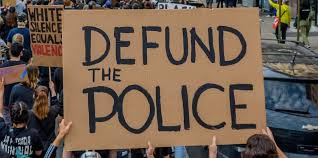
Defund the police?

https://nypost.com/2020/06/12/two-thirds-of-americans-oppose-defund-the-police-movement-poll/

There have been many contentious debates regarding defunding the police in the era of Black Lives Matter. The premise is to remove resources from the police and assign them to areas in which police officers may not be needed. While the thought process may be well-intended, it may lead to problems when the specialized groups try to address individuals who may suffer from mental health issues or who may be homeless. What happens when they get violent? Who will be there to resolve matters? I will see what the proposals are and then make a more informed decision to say whether it's a good idea.

Saturday, September 23, 2017

Let me see your hands!

This video should undoubtedly spark a lot of conversation, but which side should prevail? Please weigh in with your thoughts.

http://countercurrentnews.info/2017/09/watch-california-cop-murders-unarmed-high-school-student/

Sunday, September 10, 2017

Oops! I'm being recorded.


Personal conversations that take place amongst police officers should be respected. However, this particular back and forth sheds light on the inner workings of the profession. Sit back and listen and determine if this is a profession that you'd like to maintain or change for that matter.

http://www.trentonian.com/general-news/20170907/trenton-cops-brag-about-brutality-on-body-cam

Thursday, September 7, 2017

Shout it out. CORRUPTION!


The more it is exposed, the better chance we have of seeing change. If you were a police officer, would you stand up and shout it out?

http://www.newsworks.org/index.php/local//item/106992-several-african-american-cops-allege-racism-corruption-in-philly-police-unit-/?l=mf

Settlements never resolve problems!


There is no secret that more people are choosing to exercise their right to sue law enforcement agencies to get there issues resolved. However, the powers that be utilize their right to settle claims before they hit the courts. Saving face in this instance does nothing to shed light on the problems. How can we get the problems fixed if deep pockets keep intervening?

http://njcivilsettlements.blogspot.com/2017/

Saturday, September 2, 2017

Book: The Use and Abuse of Police Power in America


The law enforcement community has seen an uprise in controversial police interactions with all communities, but more so in the minority community. I have been fortunate to be able to write three essays (Frank Serpico, Sean Bell and Ezell Ford) for the aforementioned book. While the essays are informative, they only shed a small spotlight on the internal issues. As future law enforcement professionals, it should be your responsibility to try and make the necessary changes from within. For those of you who are seeking a position, please share what you think is necessary to help with this process.

https://books.google.com/books?id=6sm-DgAAQBAJ&q=brian+royster#v=snippet&q=brian%20royster&f=false


DACA. Where do you stand?

Everyone will have an opinion on this topic. However, putting yours aside, think about how you would feel if this was to affect YOU personally, then chime in with your thoughts.

http://www.foxnews.com/politics/2017/09/01/what-is-daca-and-why-would-trump-dismantle-it.html


Sunday, February 19, 2017

The fight continues!

On January 17, 2017, the New Jersey Supreme Court rendered its decision in my ongoing litigation with the New Jersey State Police.


Supreme Court of New Jersey.

BRIAN ROYSTER, Plaintiff-Appellant, v. NEW JERSEY STATE POLICE
and JOSEPH R. FUENTES,

075926

    Decided: January 17, 2017

JUSTICES LaVECCHIA, PATTERSON, FERNANDEZ-VINA, and TIMPONE join in JUSTICE SOLOMON's opinion. JUSTICE ALBIN filed a separate, partially CONCURRING and partially DISSENTING opinion, in which CHIEF JUSTICE RABNER joins.Michael J. Reimer argued the cause for appellant. Michael C. Walters, Assistant Attorney General, argued the cause for respondents (Christopher S. Porrino, Attorney General of New Jersey, attorney; Lisa A. Puglisi, Assistant Attorney General, and Ralph R. Smith, III, of counsel, Mr. Smith, Benjamin H. Zieman, Deputy Attorney General, and Laurel B. Peltzman, on the briefs).
In this appeal, we are called upon to determine whether the New Jersey State Police (NJSP), by waiting to assert the defense of sovereign immunity until a jury verdict was returned against it in this discrimination action, either waived through its litigation conduct or is estopped from asserting the defense of sovereign immunity.
Plaintiff Brian Royster filed a complaint against his employer, the NJSP, alleging several racial and disability discrimination claims. Plaintiff asserted that the NJSP failed to make reasonable accommodations for his disabling medical condition -- ulcerative colitis -– in violation of the New Jersey Law Against Discrimination (LAD), N.J.S.A. 10:5-1 to -42, and the federal Americans with Disabilities Act (ADA), 42 U.S.C.A. §§ 12101 to 12213. In addition, plaintiff complained of retaliatory conduct in violation of the LAD, ADA, and New Jersey Conscientious Employee Protection Act (CEPA), N.J.S.A. 34:19-1 to -14.
At the close of plaintiff's case, the trial court categorically dismissed all of the LAD claims as precluded by CEPA's waiver provision, N.J.S.A. 34:19-8. Following summation, the jury returned a verdict in favor of plaintiff on the remaining ADA and CEPA claims. The NJSP subsequently moved for judgment notwithstanding the verdict, invoking sovereign immunity to bar plaintiff's ADA claim. The trial court denied the motion and found that defendant was estopped from asserting sovereign immunity after the jury's verdict.
The Appellate Division reversed, holding that sovereign immunity can be raised at any time, even after a trial has concluded. The panel also rejected the notion that the NJSP was estopped from asserting or waived the defense of sovereign immunity through its litigation conduct.
We agree with the Appellate Division that sovereign immunity precludes plaintiff's ADA claim. We conclude, however, that his LAD claim for failure to provide reasonable accommodations was improvidently dismissed. As a result, we reinstate the LAD claim and remand to the trial court with instructions to mold the jury's verdict and enter judgment on plaintiff's LAD claim in favor of plaintiff and against the NJSP in the amount of $500,000.

If you are interested in all of the facts, please view the attached article with the full details.

http://caselaw.findlaw.com/nj-supreme-court/1765832.html

Friday, April 17, 2015

To test or not to test? What is the best way to choose a leader?

Having spent 25 years in the New Jersey State Police (NJSP), it truly astounds me when disingenuous entities continually try to pull the wool over people's eyes. Most police departments utilize a formalized test to promote leaders. While I don't think it is always a great indicator, it does give a person a fair chance at getting promoted. This article speaks to the internal problems within the NJSP regarding its promotional system. It is my hope that they get this problem fixed before the adjoining lawsuits bankrupt the State of New Jersey.


http://www.nj.com/politics/index.ssf/2015/04/in_major_shift_nj_state_police_change_promotion_pr.html

Wednesday, April 8, 2015

The recent shooting in South Carolina is just an example of how much work that still needs to be done in the law enforcement profession. There is absolutely no excuse for this police officer's actions. (PERIOD). This should be the easiest murder trial in history. Let's see if the criminal justice system gets this one right.

http://www.nytimes.com/2015/04/08/us/south-carolina-officer-is-charged-with-murder-in-black-mans-death.html?_r=0

Sunday, March 15, 2015

The fight is not over.

The Appellate court came back with its decision to overturn the jury's verdict. Personally, I don't understand our present judicial system, but I must abide by it. I have spoken with my attorney and we will be filing an appeal with the Supreme Court. This has been a very long process but I am patient. This was never about the money and I still feel vindicated. You can read the judges decision yourself.

http://www.nj.com/politics/index.ssf/2015/03/nj_troopers_1m_verdict_for_discrimination_retaliat.html

Saturday, February 28, 2015

The is pure ignorance. People in other countries speak at least two languages fluently. There is no reason why these police officers, aka, paid servants can't learn a few Spanish phrases.

http://countercurrentnews.com/2015/02/mississippi-cops-angry-as-city-forces-them-to-learn-a-few-spanish-phrases/
What is going on in America?

http://countercurrentnews.com/2015/02/police-unarmed-african-american-mother-and-infant/

Wednesday, February 18, 2015

To sue or not to sue.

http://www.cnn.com/2015/02/18/politics/ferguson-justice-department-lawsuit/

As the U.S Attorney prepares to exit stage left, he is possibly attempting to leave a legacy regarding race relations and the law enforcement community. Is it a little too late?

Tuesday, February 17, 2015

Job prospects.

A lot of my students are faced with the fear of graduating college and not being able to find employment. The job market is being flooded with highly education people who are competing fiercely against one another for the morsels of positions. So, what is a college educated person to do?  Don't get frustrated, get busy by staying ahead of your contemporaries. Go the extra mile and pay attention to the little things like character, diction, presentation and genuineness. It might seem rather simple, and it is, but many overlook the basics. Let a prospective employer see your authentic self in the initial interview and more than likely, you will be called back. Stay clear of controversial verbiage on any social media website because this will come back to haunt you for a very long time. Also, volunteer your time to help out someone else who is in need of assistance. More importantly, treat everyone with respect regardless of their station in life.

Sunday, April 13, 2014

Robert J. Duran (2013), Gang Life in Two Cities: An Insider’s Journey, Columbia University Press

Brian L. Royster
Saint Peter’s University

Scholarly literature pertaining to gangs is primarily written from the perspective of a researcher outside the purview of the gang. However, it is not often that a researcher possesses institutional gang knowledge, coupled with academic credentials and can strategically place a face and voice to the subject matter. This type of research is invaluable because it provides the reader with a peek into gang life. Although there are scores of books regarding gangs, Robert Duran’s, Gang Life in Two Cities, An Insider’s Journey is positioned to separate itself from the pack.
     The book is made up of seven chapters and is partially a narrative inquiry about Duran’s life, which is a powerful way of telling a story and makes it more compelling. The author has conducted this comparative analysis research in two unlikely states, Utah and Colorado, which have not been nationally highlighted as experiencing serious gang problems. In Utah, which is a conservative Mormon state, Duran cites difficulties Latinos faced trying to acclimate. In Colorado, he explains the community’s reaction to an increasing Latino population.
     The author’s status as a former gang member allowed him access to the inner workings of its lifestyle and is the book’s central theme. In Chapters 1 through 4, Duran discusses how he divorced himself from the gang through the help of a support system, but observed other Latinos continually face problems with race relations, intolerance, and immigration into predominately white communities. His book is timely because of the ongoing debate regarding United States immigration policy, and it explores why opportunities for minorities are different from those more fortunate. In a sense, it is an American story continually played out across state lines.
    The author’s depictions about his gang involvement are expressed throughout the book and are important to its authenticity. Nevertheless, what makes the book more interesting are the 145 interviews, conducted with former gang members, which are replete with anecdotes of negative police interactions. Their voices are poignant and afford the reader a greater insight as to why they joined a gang. Duran argues that their harassment by the police is tantamount to racial oppression and has a causal effect on their behavior.
    In examining the author’s interviews, the reader may come away with the impression that gang members are just making excuses.  To that end, Duran cites responses by gang members who claim that their lack of faith in the judicial system and non-support from mainstream society could be argued is strong justification for why gangs exist. Yet Duran counters that a self-fulfilling prophecy expressed by gang members is a more prominent explanation.
     In Chapter 5, Negotiating Membership, he analyzes numerous influences, e.g., marginalized neighborhoods, family survival, gender socialization, friendships and school experience, which are contributory to gang inclusion. This is important because as Duran writes, “the barrios of both Denver and Ogden brought together marginalized individuals who felt blocked from attaining legitimate opportunities” (pg.120). So, can they be blamed for not wanting to fit in and be accepted? Duran argues that the suffering of Latinos due to mainstream society causes them to contain their internal pain, only to inflict it on others.
     Chapter 6, The Only Locotes Standing discusses the reasons that hold gangs together. Duran claims his interest in this phenomenon was inspired by the work of French sociologist, Emile Durkheim and sought to answer the question of “Why did individuals stay committed despite negative outcomes?” It is in this chapter where Duran’s insider perspective sheds light on how the media personified the gang member and gave them a feeling of importance. Nonetheless, he noted that many gang members eventually recognize the internal contradictions and subsequently leave the gang.
    The author posits in Chapter 7, Barrio Empowerment that his research provides alternatives to reducing gang membership and violence. As such, there can be no more an important question confounding law enforcement and academia than why an individual seeks involvement. To his credit, the book is abounding with recommendations and strategies for gang prevention, which are well reasoned and very persuasive. Notwithstanding, his overall objective is to change the gang paradigm and address deficiencies in gang literature. Duran found the literature to be overwhelmingly written by outsiders and contradicts arguments made by critical race theorists (CRTs). Duran contends that CRTs offer a different “voice-of-color” to research and recognizes the importance of insiders.

    Duran’s book is worthy of consideration as an addendum to an introductory gang textbook, and not a primary source, solely because it doesn’t provide a more detailed historical perspective of other gangs, which could be necessary to the reader for contextual purposes. As an insider, however, his research could definitely spark a discussion amongst students in a classroom setting. This book is just as important to academia because it advances the debate, made by many scholars, regarding the credentials of theorists compared with practitioners. Fortunately, Duran’s in-depth examination of his gang experiences and pedagogical research represents both. In addition, law enforcement personnel could also find value in his book regarding how gang members perceive them. Inasmuch as his book may be construed as being biased, because he is Latino and a former gang member, Duran’s slant cannot be discounted thus making his book important for several disciplines.